Article contents
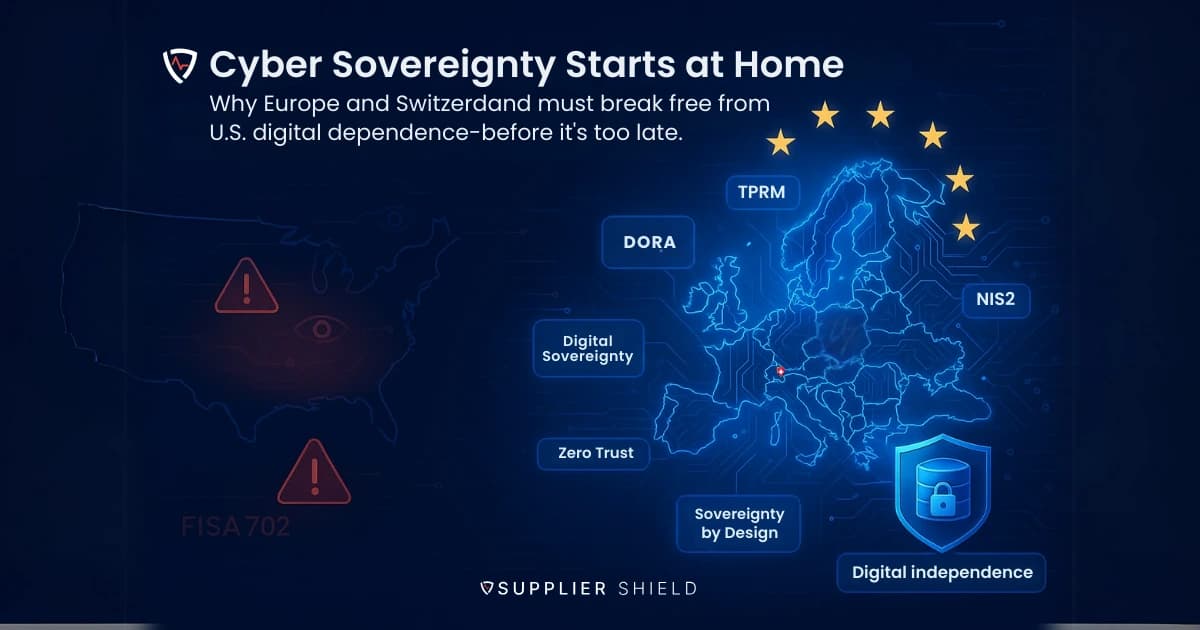
In a shifting geopolitical world, discover why European-rooted cybersecurity partners are critical for EU and Swiss organizations. Explore the growing supply chain threats, legal risks with U.S. tech providers, and the importance of digital sovereignty in third-party risk management (TPRM).
Cybersecurity isn’t just a technical responsibility anymore—it’s a strategic decision. And in 2026, that decision carries geopolitical weight. The European Union and Switzerland are navigating a digital landscape shaped by cyber warfare, policy divergence, and a rising demand for digital sovereignty.
In this report, we unpack why it’s no longer just smarter—but safer—to choose cybersecurity partners rooted in Europe. Whether you're managing supply chain vulnerabilities or trying to stay ahead of NIS2 and ISG mandates, your choice of third-party risk management (TPRM) vendor could define your operational resilience.
Background and Context
From ransomware in hospitals to data theft in the energy sector, state-sponsored cyberattacks are becoming the new frontline of geopolitical power plays. Countries like Russia, China, and North Korea are actively targeting infrastructure and economic systems. The EU and Switzerland, deeply interconnected through trade and technology, are not immune—and they are responding.
While GDPR, NIS2, and Switzerland’s FDPA and ISG reforms have raised the bar, the real challenge lies in execution. Businesses are struggling to bridge the compliance gap—especially when relying on foreign tools not built for European regulations.
US policy impacts: Why trust has eroded
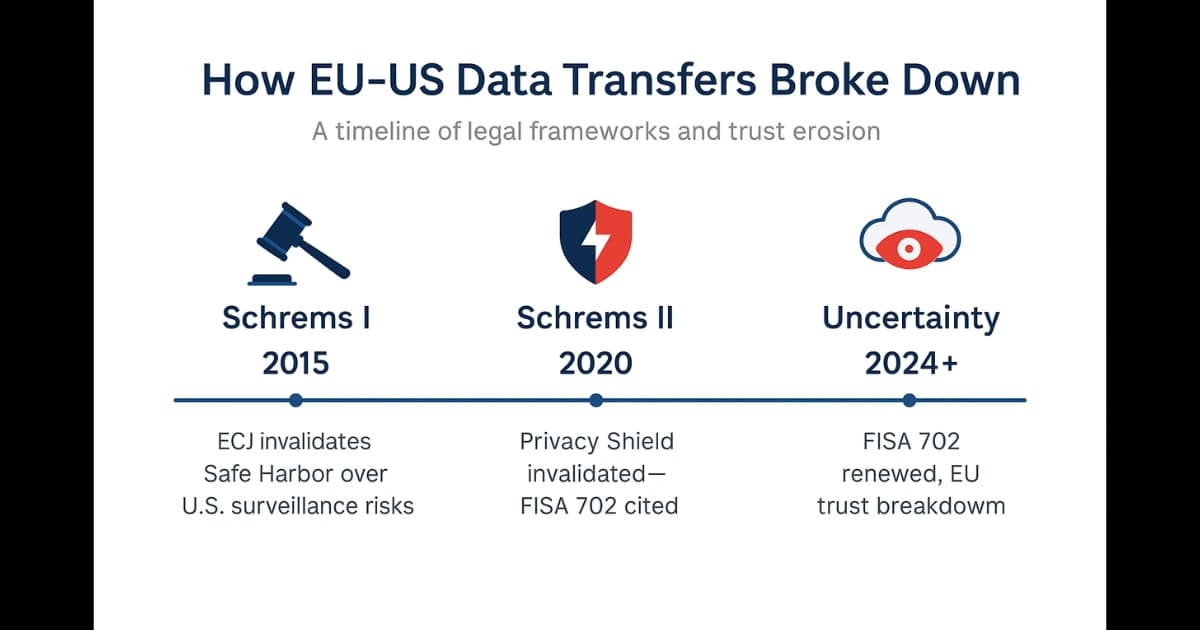
Here’s the hard truth: relying on U.S.-based tech vendors now introduces measurable legal and strategic risk. Recent policies highlight this trend:
- Schrems II (2020) invalidated Privacy Shield, exposing the incompatibility between EU law and U.S. surveillance (FISA 702, EO 12333).
- Trump's 2025 tech tariff memo targets EU digital policies seen as threats to U.S. competitiveness.
- Executive overreach: U.S. mandates like DEI compliance apply globally, even clashing with European legal frameworks.
- Cyber deregulation: The Trump administration rescinded Biden-era protections, deepening divergence.
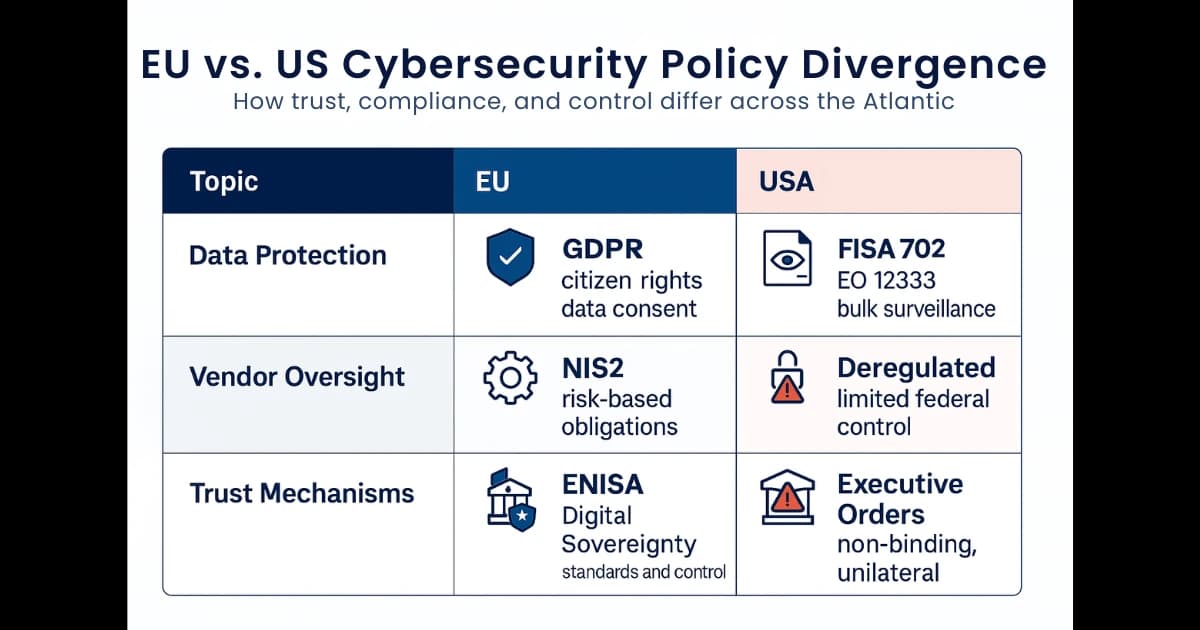
These aren't just bureaucratic squabbles—they're signals that trusting U.S. tech means forfeiting legal clarity and exposing your business to cross-border conflicts.
"What I now see and hear from the incoming US administration is not promising for this special relationship..."— Robert-Jan Smits, President, Eindhoven University of Technology
Supply chain security: It’s not just your risk—It’s everyone’s
Attacks like SolarWinds and MOVEit proved one thing: you don’t have to be the target to suffer the damage. One vendor can compromise thousands of businesses. And when that vendor is governed by foreign laws, risk becomes even harder to control.
- Ransomware losses: $42B in 2024, double from 2021
- Data extortion: Up 112% year-over-year in Europe
- Third-party risk: Non-EU vendors = 2.3x more exposure
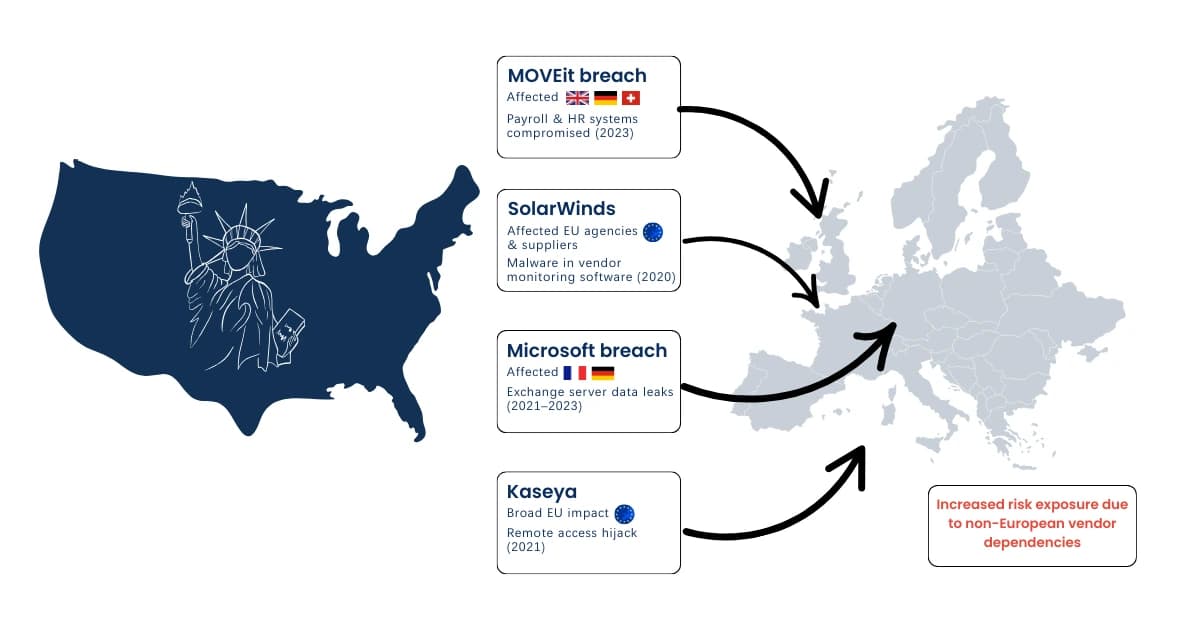
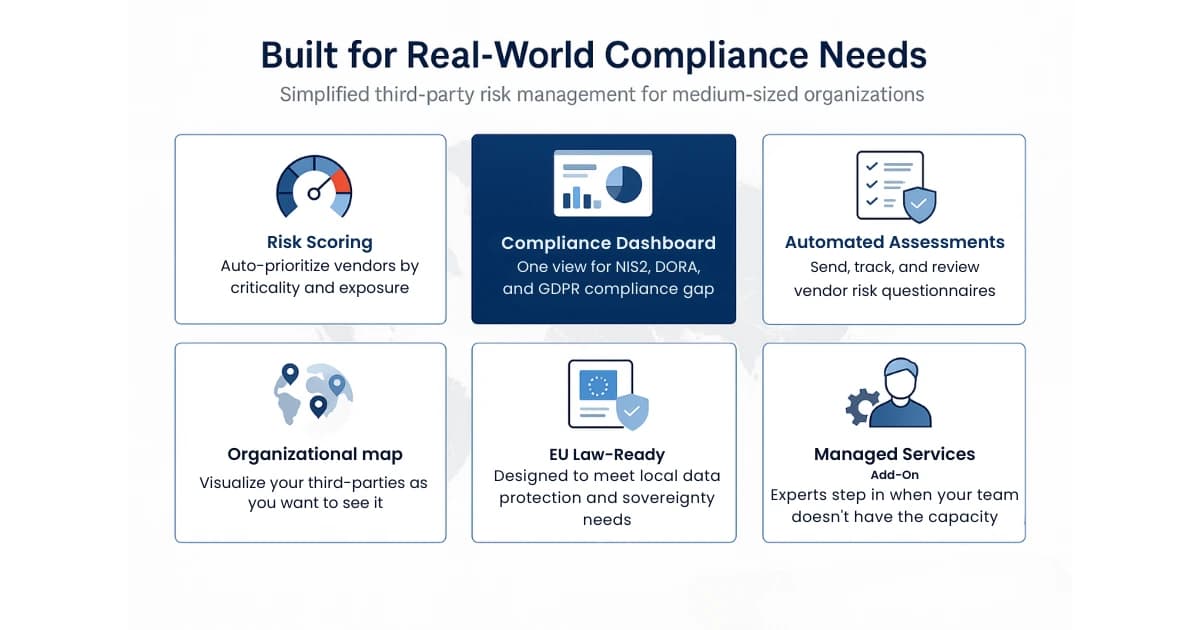
The EU’s NIS2 Directive and Switzerland’s ISG revision are forcing companies to assess their vendors more rigorously. That’s where modern tools come in—like real-time risk dashboards that simulate a digital twin of your supply chain. These tools, designed by European-rooted partners, are helping local teams map and mitigate vendor exposure across procurement, legal, and IT.
For example, Supplier Shield, a Swiss solution, integrates advisory, cloud platform, and managed services—giving firms access to on-demand auditors with on-field experience in GDPR, ISO, and NIS2. That’s more than compliance—it’s confidence.
Collaboration across borders: The EU-Swiss model
As regulations tighten, Switzerland is stepping closer to the EU’s cybersecurity ecosystem:
- Joining PESCO’s Cyber Ranges Federation
- Requiring cyber incident reporting for critical infrastructure (from April 2025)
- Participating in the EU Cyber Solidarity Act, boosting coordinated response
These shared efforts create fertile ground for innovation—and make it easier for businesses to adopt regionally aligned solutions.
Trust and sovereignty: Why local vendors matter more than ever
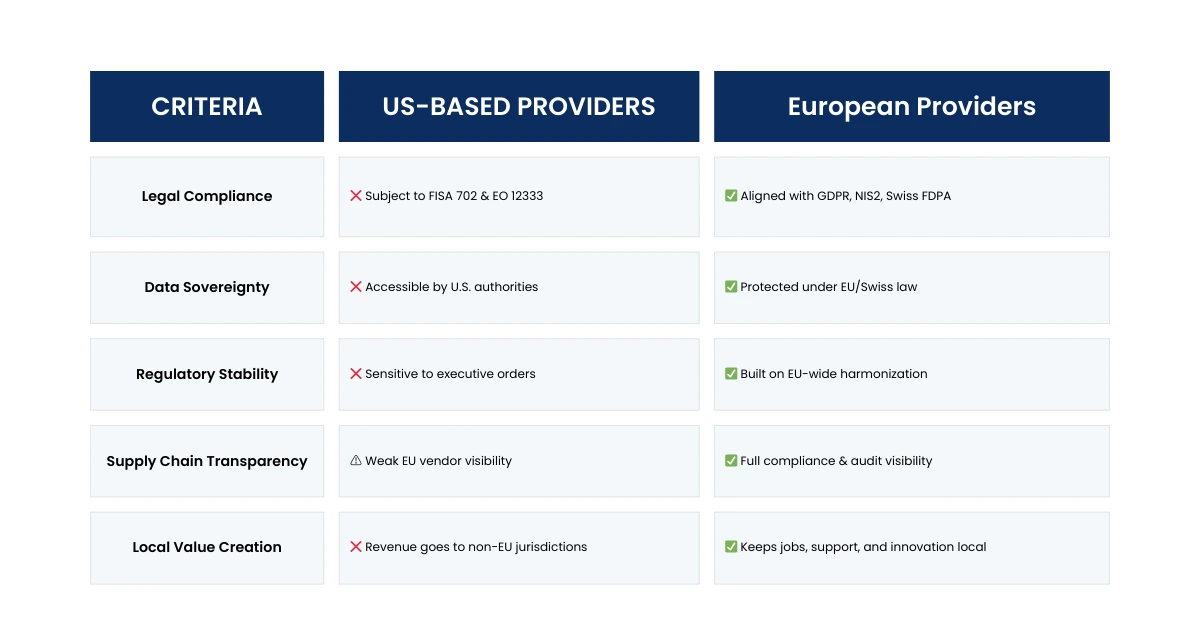
Choosing a partner for cybersecurity or third-party risk management isn’t just about who has the most features—it’s about who has your back legally, operationally, and ethically.
Providers like Supplier Shield, based in Switzerland and the EU are filling the gap—not only with software but with services. At Supplier Shield, our end-to-end services are developed by local experts offering:
- NIS2/DORA services tailored on your maturity and what do you actually need for your company (advisory, cloud platform, or managed services; we jump in when you need us)
- Managed services workflows only 1 click away within our cloud platform and are also available if needed for external solutions.
- Continuous scoring across financial, operational, and cyber dimensions
These models, championed by firms like Abilene Advisors and Supplier Shield, are reshaping how midsized enterprises approach risk. Instead of complex enterprise suites built for Fortune 500s, these platforms prioritize usability, fast implementation, and native compliance alignment.
Challenges and opportunities ahead
The biggest challenge? Complexity. With different interpretations of NIS2 across EU member states—and Switzerland’s parallel path—companies need clear guidance and integrated tooling.
But the opportunity is clear: by investing in regional partnerships, businesses can simplify compliance, reduce vendor risk, and strengthen resilience. AI-driven assessments, continuous monitoring, and shared cyber response protocols are within reach—especially with the help of local expertise.
Don’t just buy cybersecurity—Build digital independence
Every procurement decision is now a strategic one. And in cybersecurity, it’s also a political one. EU and Swiss companies cannot afford to rely on partners misaligned with their laws, values, or threat models.
Choosing local isn’t just patriotic—it’s practical. Providers like Abilene Advisors and Supplier Shield aren’t just closer to the market—they’re built for it. By choosing trusted European-rooted partners, you’re choosing sovereignty, security, and sustainability.
Because in today’s world, digital resilience starts at home.
Key Citations
Supply Chain Security and NIS2: What You Need to Know
Good Practices for Supply Chain Cybersecurity
EU’s First Ever Report on the State of Cybersecurity in the Union
Cybersecurity Policies Shaping Europe’s Digital Future
Neutral Swiss to Join Two EU Security Cooperation Projects
Trump Administration Warns European Companies on DEI Order
Trump Takes Aim at 'Overseas Extortion' of American Tech Companies
How Trump Could Impact EU-US Science and Technology Relations
Trump’s Moves to Modernize U.S. Technology Policy
America under Trump: Domestic and European Implications
EU and United States Enhance Cooperation on Cybersecurity
Cybersecurity 2025 Switzerland Trends and Developments
Switzerland Mandates Cyber Reporting for Critical Infrastructure
Joint Statement on the 2023 U.S.-Swiss Cyber and Digital Dialogue
Want this applied to your supplier ecosystem? See the platform in action and map your top vendor risks live in one walkthrough.