Article contents

Learn how procurement-led third-party risk management supports NIS2 compliance, boosts resilience, and improves supplier oversight.
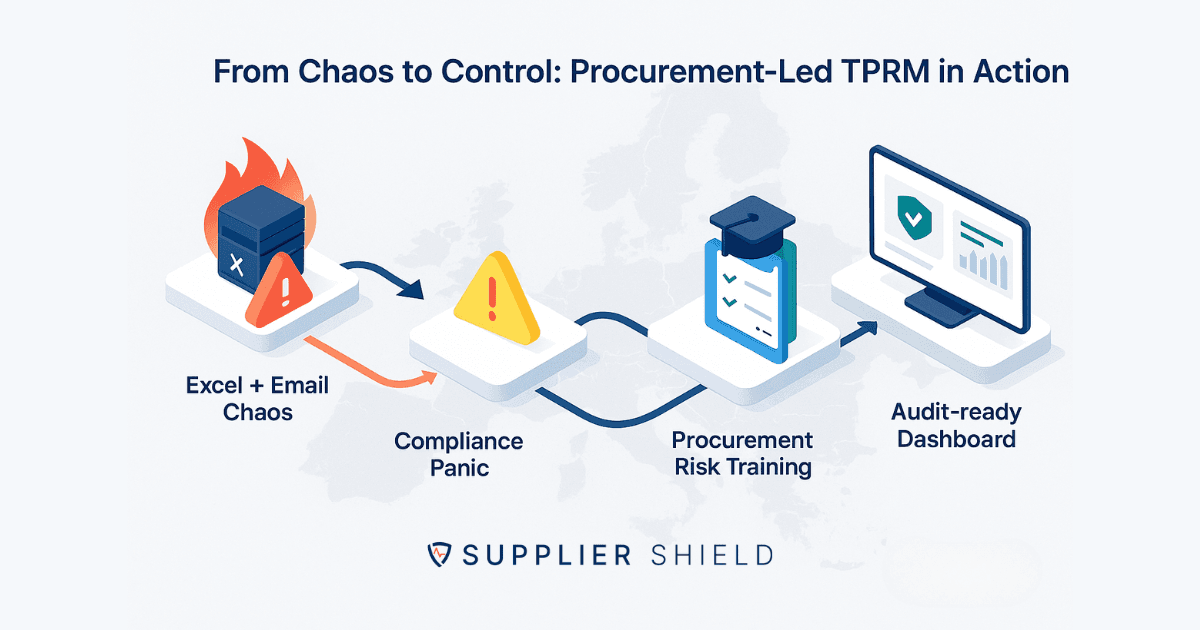
Procurement-led third-party risk management (TPRM) empowers organizations to embed risk controls earlier in the supplier lifecycle. By integrating risk criteria into sourcing, contracts, and onboarding, procurement teams can drive proactive compliance with regulations like NIS2 and ISO 27001. This approach ensures better supplier alignment, reduces downstream incidents, and improves audit readiness. McKinsey reports that early-stage risk screening by procurement can cut third-party exposure by over 50% (McKinsey, 2023).
Procurement-led TPRM integrates procurement into the risk management process, addressing regulatory requirements like NIS2 while improving operational resilience and supplier oversight.
1. Reframing third-party risk: why procurement must lead
Most third-party risk management (TPRM) programs are still IT-driven, leaving procurement out of the equation. Nevertheless, procurement owns the vendor relationships, understands supplier dependencies, and plays a critical role in operational continuity. Ignoring this link is a missed opportunity�especially under regulations like NIS2, which broaden the definition of responsibility across business functions.
? Takeaway: Procurement isn�t support. It�s strategic risk intelligence.
2. What NIS2 means for procurement leaders
The NIS2 Directive extends cybersecurity accountability to essential and important entities�including those in procurement, supplier onboarding, and vendor lifecycle management.
Key highlights:
- Scope: Applies to healthcare, energy, digital infrastructure, manufacturing, and beyond.
- Deadline: October 2024
- Penalties: Fines, license loss, reputational damage
?? If procurement is missing from your TPRM response plan, you're not compliant.
3. The procurement advantage in risk management
Procurement holds unique supplier insights that IT often can�t access:
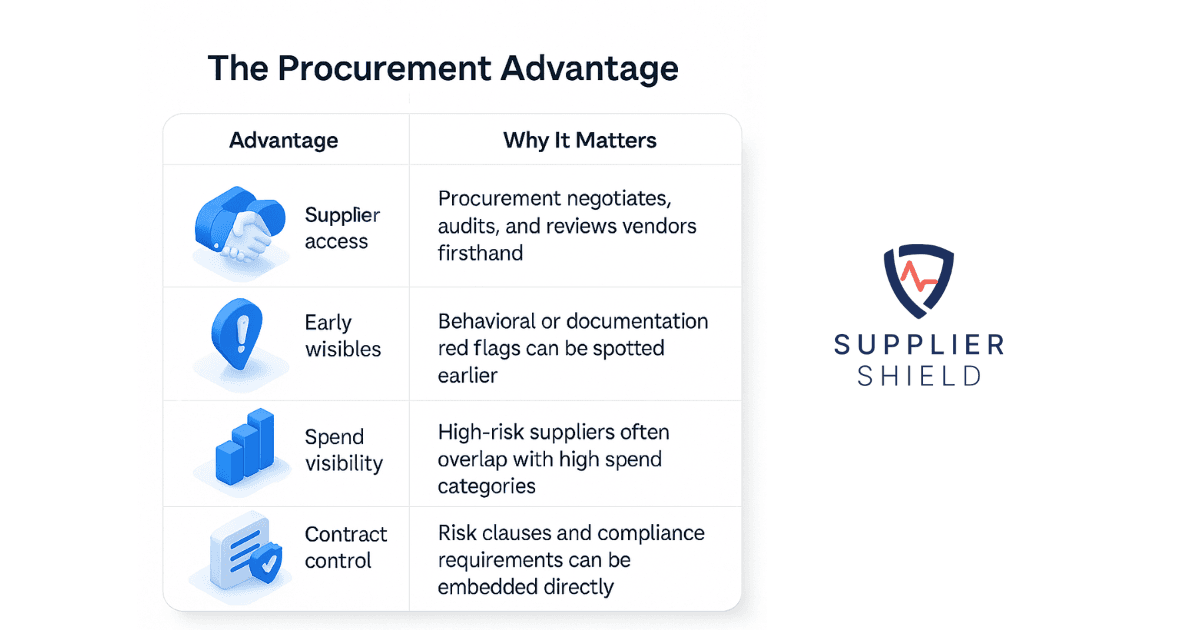
4. How to implement procurement-led TPRM
Action steps:
- Cross-functional governance
Form TPRM teams with compliance, IT, and procurement equally represented. - Train procurement on risk
Teach how to evaluate cybersecurity risks, regulatory red flags, and due diligence.
? Use providers like Abilene Academy, already trusted by 1,000+ students from leading organizations. - Use the right tech stack
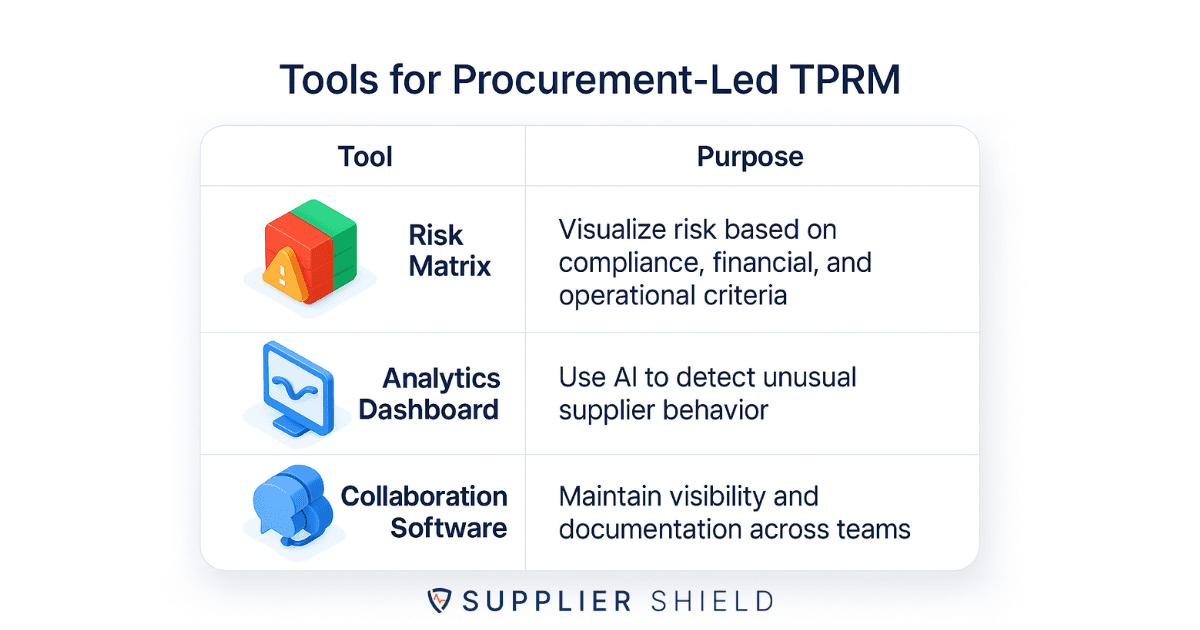
Invest in platforms like Supplier Shield to unify assessments, documentation, and risk scoring.
5. Must-have tools for procurement-led TPRM
?? Checklist for procurement-led TPRM:
- Map all third-party suppliers
- Assess and classify supplier risks
- Align procurement controls with NIS2 compliance
- Monitor vendor performance consistently
- Update assessments regularly
6. Real-world examples of procurement-led TPRM success
?? Global Manufacturing Firm
Centralized its procurement and TPRM workflows ? reduced supplier-related risks by 30%
Tactic: Proactive supplier audits and ongoing risk scoring.
?? European Technology Provider
Adopted AI analytics to monitor supplier networks ? increased NIS2 readiness by 40%
Tactic: Embedded compliance alerts in procurement workflows.
7. Wrapping up
Procurement-led TPRM isn�t just more efficient�it�s regulatory gold. By embedding procurement into the risk function, organizations can:
- Preempt compliance failures
- Respond faster to supplier incidents
- Align internal teams across security, compliance, and sourcing
With NIS2 enforcement approaching, now�s the time to act.
FAQ
What is procurement-led TPRM?
It integrates procurement into third-party risk management, ensuring suppliers are assessed not just by IT but also on operational and contractual dimensions.
How does NIS2 affect procurement?
Procurement processes must now consider cybersecurity and regulatory exposure as part of risk assessments.
What tools help implement it?
Supplier risk matrices, AI analytics, compliance platforms like Supplier Shield. (Try for free today.)
Why should procurement lead?
They own supplier relationships, understand business impact, and can catch risk indicators early.
Want this applied to your supplier ecosystem? See the platform in action and map your top vendor risks live in one walkthrough.