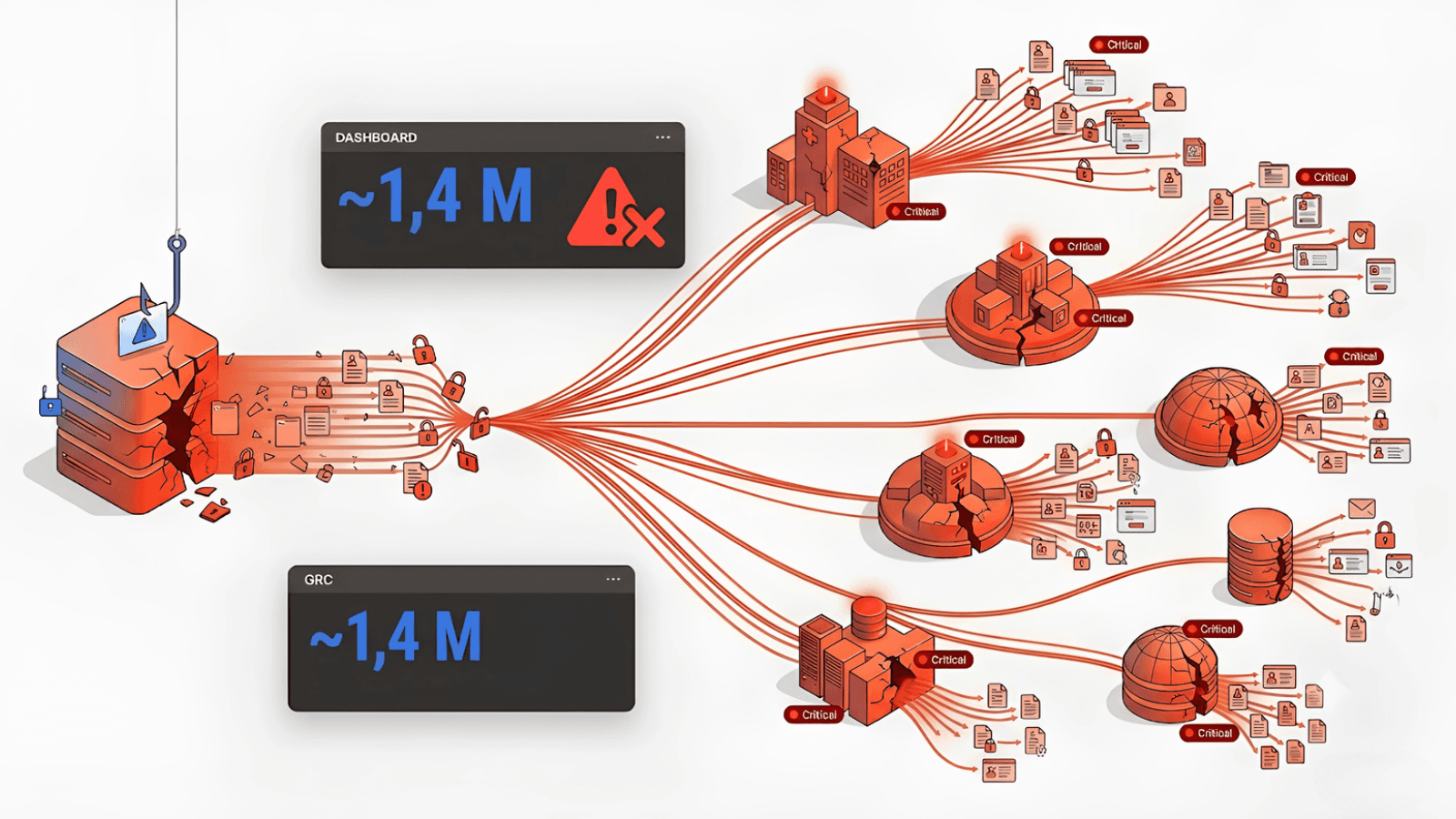
A phishing attack at Xsolis, a US healthcare vendor that many hospitals and insurers use to review whether care is covered, exposed the data of about 1.4 million people. Patients at Mayo Clinic, UW Medicine and VHC Health were among those affected, because one vendor held records from many providers at once.
A breach at a single healthcare vendor reached patients at some of the largest hospital systems in the United States. Xsolis, a US health-technology company that hospitals and insurers use to review whether care is necessary and covered, disclosed on 24 June 2026 that a phishing attack exposed the data of about 1.4 million people. The stolen files held names, dates of birth, Social Security numbers, and medical treatment information. Downstream, patients at Mayo Clinic, UW Medicine, and VHC Health were among those affected. The lesson: when one vendor holds records from many providers, a single phishing email becomes everyone's incident. This story is several weeks old, so the value is in the pattern, not the timeline.
What happened
According to a breach notice filed with the California Attorney General's Office, Xsolis experienced a targeted phishing attack on 22 January 2026. The company said it contained the intrusion, ended the unauthorised access, and has found no evidence that the data was misused. The attacker acquired files containing names, addresses, dates of birth, Social Security numbers, medical treatment information, and health insurance information. Xsolis notified about 1.4 million individuals and offered free credit monitoring and identity protection.
Xsolis did not publish a list of affected clients. Several providers issued their own notices instead. Mayo Clinic said it learned of the incident on 23 April 2026, and did not state how many of its patients were involved. UW Medicine said about 23,600 of its patients were affected. Virginia-based VHC Health also linked to the Xsolis notice. Reporting by TechTarget and Cybernews named further health systems and an insurer client, though not every organisation has individually confirmed its exposure. That wider list is reported, not confirmed by each named party.
Why it matters for third-party risk
The pattern is data concentration at a shared processor. Xsolis performs utilisation management, the review of whether hospital care is medically necessary and reimbursable, so it holds records from many hospitals and insurers at once. That makes one vendor a single point of failure. When it is breached, the exposure fans out to every provider that fed it data, whether or not those providers did anything wrong. Each affected hospital's patients received a notice about a company they had likely never chosen. The entry point was ordinary: one phishing email to one employee. Third-party incidents are now a large share of healthcare breaches. A survey of healthcare leaders by the vendor Omega Systems found that about 85 percent had suffered an operational disruption tied to a third-party supplier in the past year.
What teams should take from it
Two takeaways. First, map which vendors hold your patient or customer records and how many other clients they serve. A processor that aggregates data from many organisations carries more downstream risk than its headcount or contract size suggests, so it deserves closer monitoring and tighter notification terms. Second, treat phishing resistance at your vendors as your own exposure. Ask processors how they protect privileged accounts, whether they enforce phishing-resistant multi-factor authentication (a login that cannot be handed over by a tricked employee), and how fast they will tell you when an account is compromised.
For teams deciding which processors sit closest to their most sensitive data, this is a prompt to see how continuous vendor monitoring works, so a phishing email at a supplier does not surface months later as your own breach notice.
FAQ
What is Xsolis and what does it do?
Xsolis is a US health-technology company that provides AI-assisted utilisation management, revenue cycle, and payer-provider collaboration tools. Hospitals and insurers use it to review whether care is necessary and covered, so it processes patient data on their behalf.
Who was affected by the Xsolis breach?
Xsolis notified about 1.4 million individuals. It did not publish a client list, but Mayo Clinic, UW Medicine (about 23,600 patients), and VHC Health confirmed exposure through their own notices. Other systems have been named in reporting but have not all individually confirmed.
How did the breach happen?
Through a targeted phishing attack on 22 January 2026, according to a notice filed with the California Attorney General's Office. The attacker reached files containing names, Social Security numbers, and medical and insurance information. Xsolis said it found no evidence of misuse.
Want this applied to your supplier ecosystem? See the platform in action and map your top vendor risks live in one walkthrough.