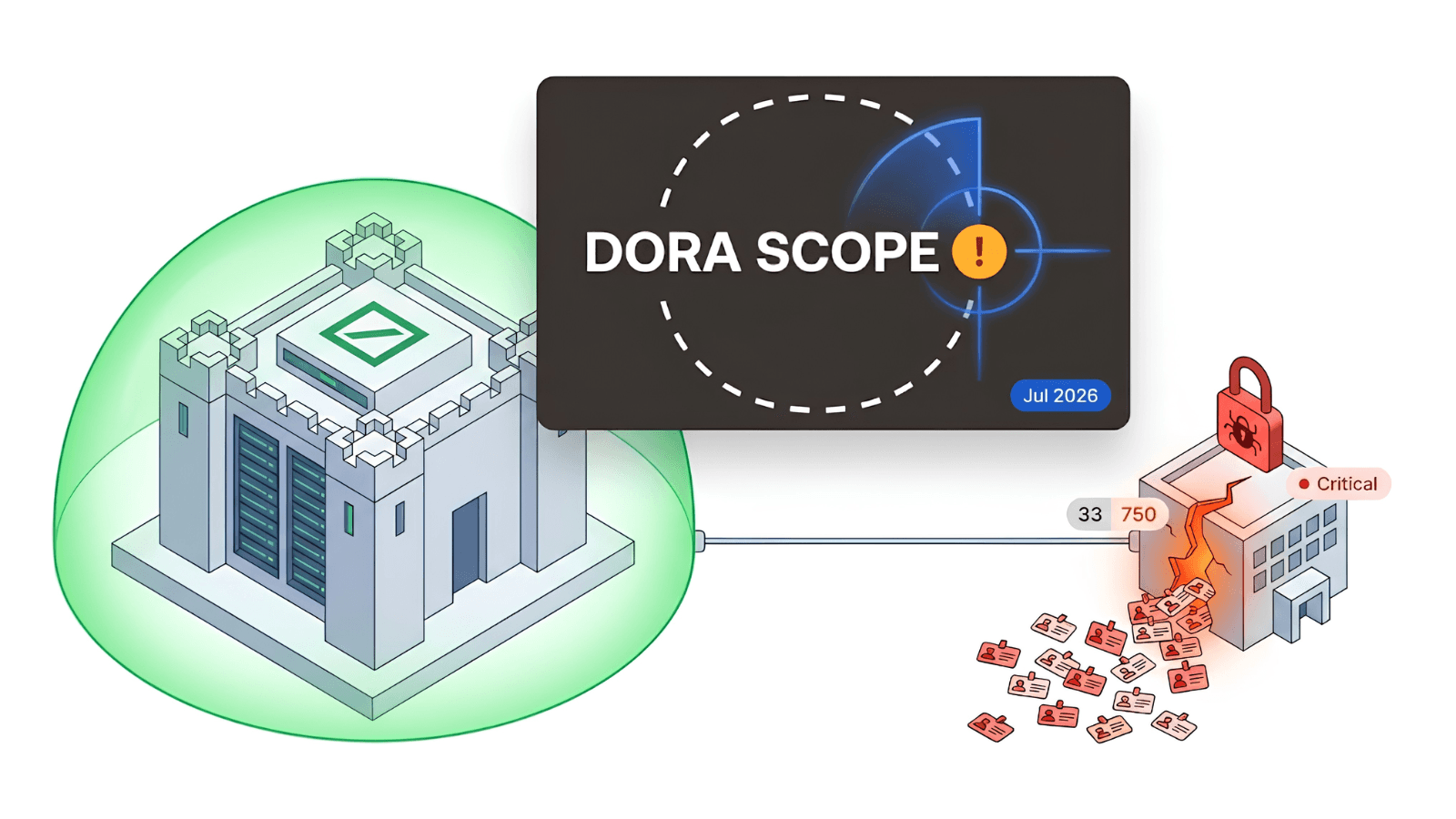
A cyber incident tied to Deutsche Bank started at a third-party marketing and incentive platform in Germany, not the bank's own network. The Unsafe ransomware group posted alleged employee records; Deutsche Bank says its systems were not affected and the scope is unconfirmed. For financial firms, the lesson is a DORA register one: an edge supplier that holds employee or partner data still belongs in scope.
A cyber incident tied to Deutsche Bank did not start inside the bank. It started at a supplier. On 4 July 2026 the ransomware group Unsafe listed Deutsche Bank on its dark-web leak site and posted screenshots it said showed employee records. Deutsche Bank says the incident hit an external service provider in Germany that runs a marketing and incentive platform for its sales partners, not the bank's own network. The lesson for financial firms: a third party that never touches your core systems can still hold your people's data, and it still belongs in your risk register.
What happened
The Unsafe group added Deutsche Bank to its leak site on 4 July 2026, according to ransomware trackers and reporting by Cybernews. As proof, it published screenshots that appeared to show database extracts, terminal commands, and records with employee email addresses, password hashes, and physical addresses. Cybernews researchers who reviewed the samples said they could not determine whether any customer data was included, so the full scope is unconfirmed.
Deutsche Bank told Cybernews it had been informed of a cybersecurity incident at an external service provider in Germany that operates a marketing and incentive platform for the bank's sales partners. The bank said there is no indication its own systems or networks were affected, and no evidence of unauthorised access to its network. It said it is investigating with the provider to reduce potential risk. Unsafe runs a ransomware-as-a-service operation (it leases its malware to affiliates who carry out attacks) and uses double extortion, encrypting systems while threatening to publish stolen data. It has been active against organisations in Germany, Switzerland, France, and the United States in 2026.
Why it matters for third-party risk
The pattern here is register scope, not a broken firewall. A marketing and incentive platform sits at the edge of a bank's technology estate. It is easy to treat as a low-risk tool because it does not run payments or hold accounts. It can still process employee and sales-partner data, and a breach there still carries the bank's name. Under the EU Digital Operational Resilience Act (DORA), the regulation that governs how financial firms manage technology and third-party risk, firms must keep a register of ICT third-party providers and classify which of them support important or critical functions. A platform like this can fall into a grey zone: real enough to hold sensitive data, peripheral enough to be missed when the register is drawn up. That gap is the story.
What teams should take from it
Two takeaways. First, scope your DORA register by data and access, not by how central a service feels. A supplier that holds employee or partner records belongs in the register even if it never touches a core banking system. Second, agree incident-notification terms with edge suppliers before an incident, not after. When a marketing vendor is breached, the clock on your own reporting obligations can start before the vendor has told you much. Contractual notice windows and a named contact turn a surprise into a process.
For teams reviewing their own scoping, this is a prompt to check what belongs in a DORA ICT third-party register, including the edge suppliers that hold data but never touch a core system.
FAQ
Was Deutsche Bank's own network breached?
Deutsche Bank says no. It states there is no indication its internal systems or networks were affected and no evidence of unauthorised access to its network. It attributes the incident to an external service provider in Germany and says it is still investigating.
What data is involved?
The Unsafe group posted screenshots it said showed employee email addresses, password hashes, and physical addresses. Researchers who reviewed the samples could not confirm whether customer data was included. The scope is unconfirmed.
Why is a marketing platform a DORA concern?
DORA asks financial firms to identify and manage ICT third parties, including those that hold their data. A marketing or incentive platform can hold employee and partner information, so it can carry regulatory and reputational risk even though it is not a core banking system.
Want this applied to your supplier ecosystem? See the platform in action and map your top vendor risks live in one walkthrough.