A ransomware group has claimed a breach of Hemmersbach, a German IT services provider that works inside its clients' technology estates. Researchers say the exposed data includes credentials to the firm's own identity systems. Hemmersbach has not confirmed the attack and the scope is unverified. For third-party risk teams, the lesson is about vendor access: a supplier's stolen login can become a route toward the clients it serves.
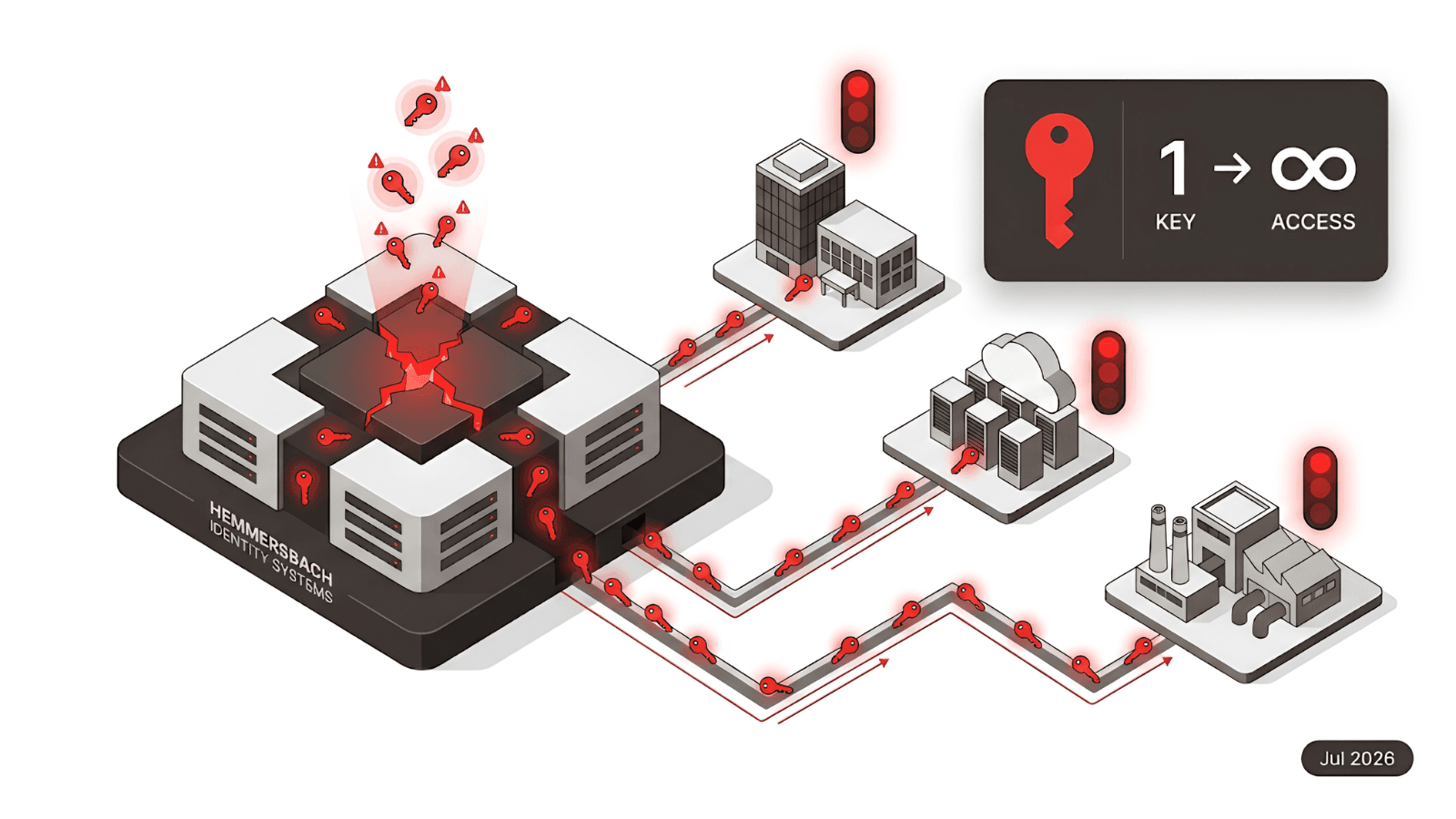
A ransomware attack on a German IT services firm is a reminder that a supplier with access to your systems is a supplier that carries your risk. On 30 June 2026 the Qilin group listed Hemmersbach GmbH on its leak site. Hemmersbach manages devices and field service for large IT manufacturers and outsourcing providers, so it works inside its clients' technology estates. Researchers say the exposed data includes credentials to Hemmersbach's own identity systems. The company has not confirmed the attack, and the scope is unverified. The lesson: a vendor's stolen login can become a path into the clients it serves.
What happened
On 30 June 2026 the Qilin ransomware group added Hemmersbach GmbH & Co. KG to its dark-web leak site, according to ransomware trackers including SOCRadar and Ransomware.live. Hemmersbach, based in Germany, provides Device-as-a-Service (managing client hardware across its life cycle) and international field service for IT manufacturers, system integrators, and outsourcing providers. SOCRadar reported that stealer-log data tied to the hemmersbach.com domain clustered between 28 and 30 June 2026. The exposed items were said to include corporate credentials for Microsoft Entra ID (the firm's cloud identity service) and an internal single-sign-on endpoint that controls staff logins, plus corporate email accounts on external services. Qilin runs a ransomware-as-a-service operation (it leases its malware to affiliates) and often gains entry using credentials harvested by infostealer malware. Hemmersbach has not published a statement confirming the incident, and the volume and sensitivity of any stolen data are unconfirmed.
Why it matters for third-party risk
The pattern is vendor access, not just a data leak. Hemmersbach's business is to operate inside other companies' technology estates. A field-services and device-management provider holds logins, remote-access rights, and sometimes administrative control over the systems it maintains. When the exposed artifacts are identity credentials and a single-sign-on endpoint, the question shifts from what data was lost to what access was lost. A stolen supplier login can be reused against the clients that supplier serves. That is how one supplier breach becomes a fourth-party problem: the clients never chose this risk, but they can inherit it through the vendor.
What teams should take from it
Two takeaways. First, treat vendors with standing access as an extension of your own attack surface, and monitor them continuously, not only at onboarding. Hold a device-management or field-services provider to the same identity controls you apply internally: phishing-resistant multi-factor authentication, short-lived access, and fast revocation. Second, ask suppliers where their own credentials live. If a vendor's staff logins can be harvested by infostealer malware, your access is only as safe as their endpoint hygiene.
For teams reviewing supplier access, this is a prompt to see how continuous vendor monitoring works, so a vendor's problem does not quietly become yours.
FAQ
Has Hemmersbach confirmed the attack?
Not in public. The claim comes from the Qilin group's leak-site listing on 30 June 2026 and from analysis by ransomware trackers such as SOCRadar and Ransomware.live. Hemmersbach has not published a statement, and the scope of any stolen data is unconfirmed.
Why is an IT services supplier a supply-chain risk?
Providers like Hemmersbach work inside their clients' systems, managing devices and holding access. A breach of the supplier's credentials or identity systems can give an attacker a route toward the clients that supplier serves, even if those clients were not attacked directly.
What should the supplier's clients do now?
Review what access the supplier holds, rotate any shared or vendor-linked credentials, watch for logins from vendor accounts, and ask the supplier for an incident update in writing. Contractual notice terms make that request routine rather than a favour.
Want this applied to your supplier ecosystem? See the platform in action and map your top vendor risks live in one walkthrough.